Evidence you can see: screenshots, recordings, and a login that beats 2FA
A green checkmark is not proof. The newest TFactory work makes the verdict legible — visible screenshots and recordings in the cockpit, an honest per-criterion ledger, and a real two-factor login captured on its way through.
A test pipeline earns trust by showing its work. For a while TFactory could tell you “all five acceptance criteria verified” and even name the screenshots it captured — but when you opened the portal there were no pictures. The evidence existed as files on disk; nothing rendered it. This post is about closing that gap, end to end, on real runs.
The verdict, made legible
The browser lane now runs in a reproducible per-task Nix toolchain inside an
ephemeral Kubernetes Job (RFC-0005 Tier A). It drives the real deployed app,
captures a screenshot of each rendered page and a Playwright recording of the
test driving it, and writes them into the task’s findings/. The portal serves
those bytes and renders them in two places.
The Acceptance tab is the honest headline. It maps each acceptance criterion
to the tests that exercise it and grades it verified only when one of those
tests actually passed — “verified X/Y”, never a blanket “done”:
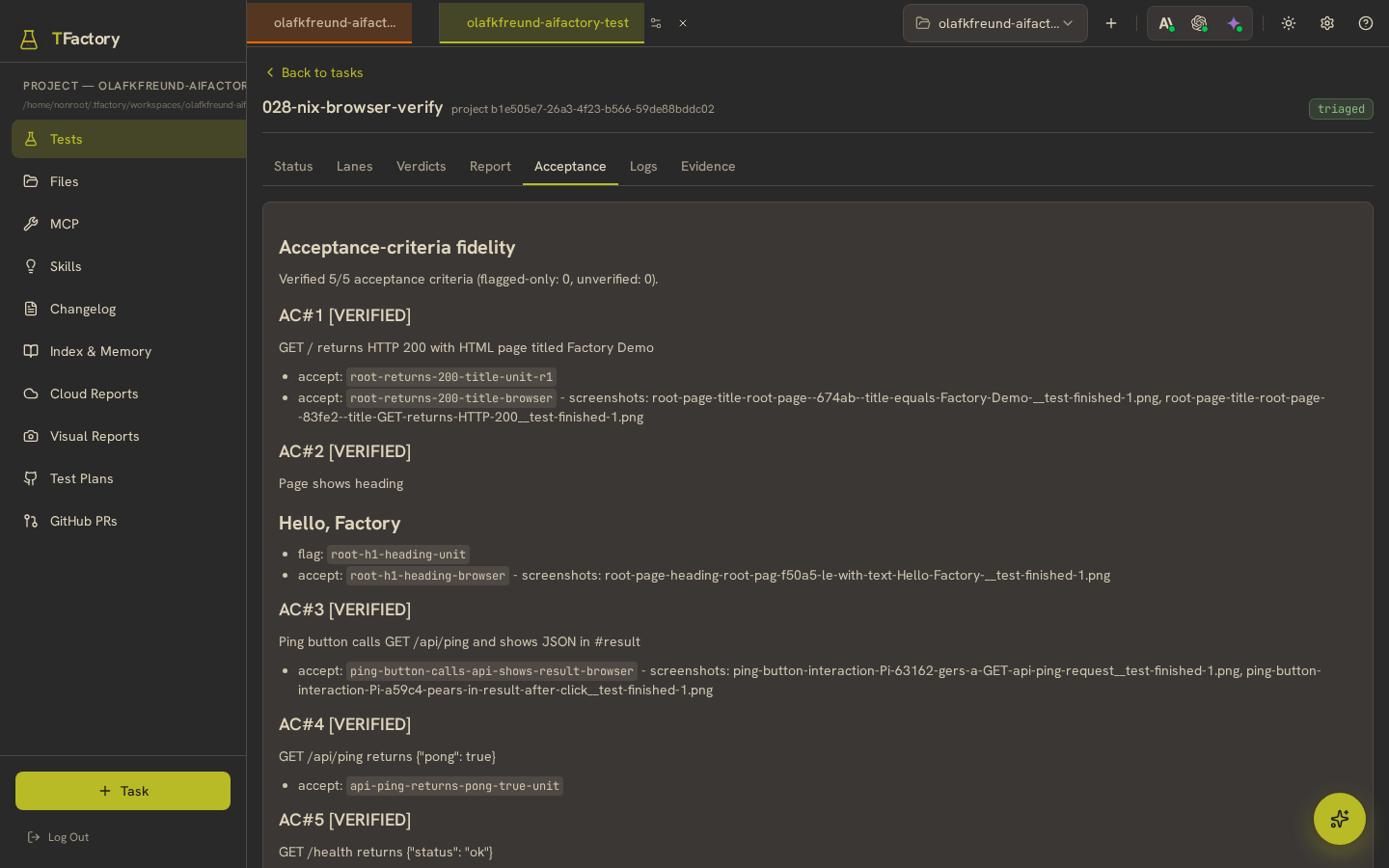
The Evidence tab is the gallery: the recordings play inline and the screenshots render as thumbnails, so a reviewer can watch the test execute and look at the page it produced — without shelling into a pod or digging through a CI log:
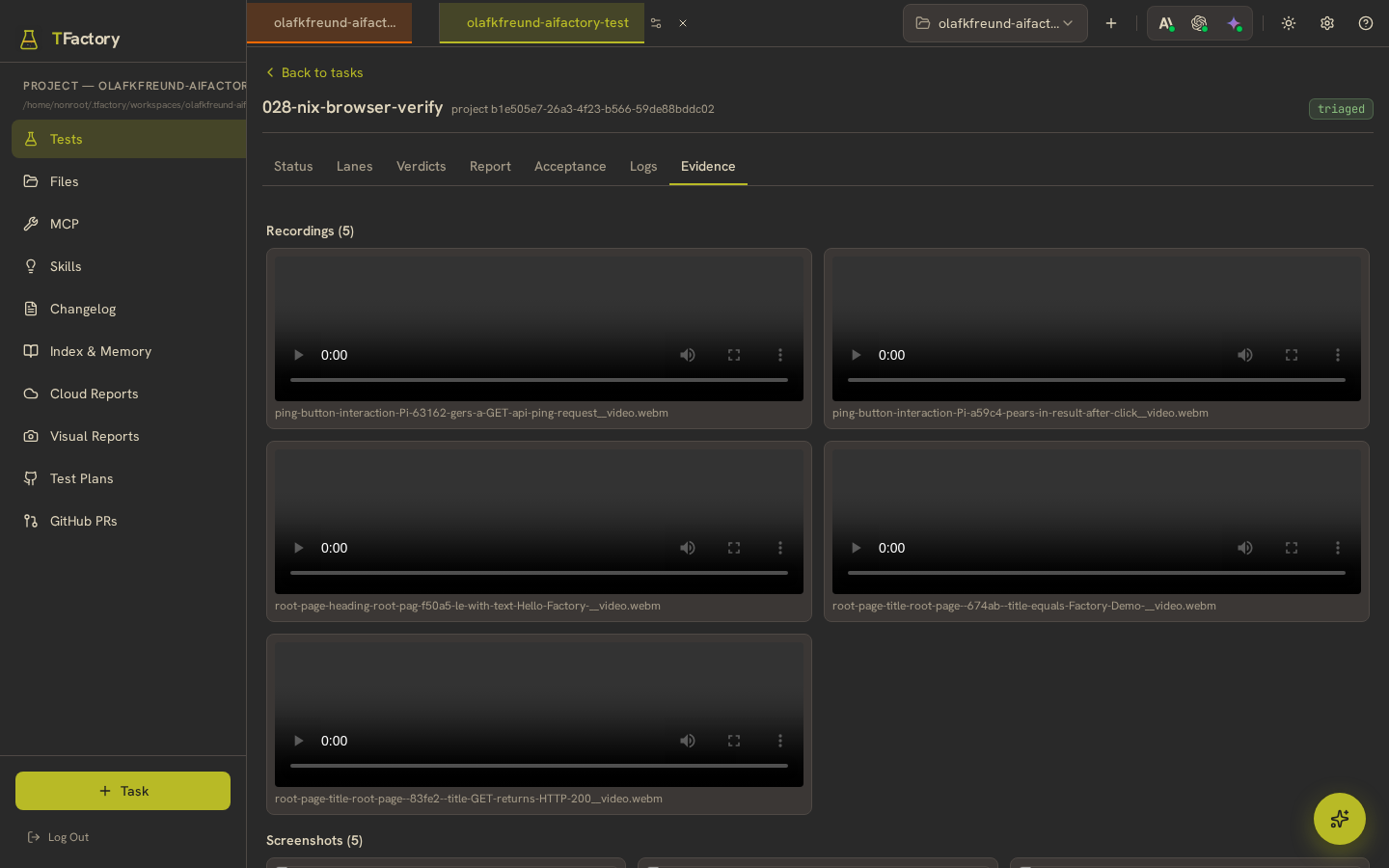
The same evidence appears on the finished task in the CFactory cockpit, so the one-pane view over the whole Factory line shows the proof too.
How we proved it
On the live cluster, against a small FastAPI app with five acceptance criteria (a titled page, a heading, a Ping button that calls an API, and two JSON endpoints): two consecutive browser runs, three of three generated specs passing each time, six screenshots and five recordings captured per run. The screenshot endpoint returns a valid PNG and the video endpoint a valid WebM; the acceptance ledger reads verified 5/5, with the title, heading and ping-button criteria each backed by a screenshot. The proof is the bytes the run produced, not a mock-up.
A login that beats two-factor auth
The harder claim is authentication. Real acceptance criteria often hide behind a
login — and increasingly behind a one-time code. We do not bypass MFA. Following
the access model’s Class C pattern, the pipeline provisions a disposable
identity provider (an ephemeral Keycloak), seeds a user whose OTP secret it
owns, and tears the whole thing down afterwards. Because it owns the secret, it
can generate valid RFC-6238
codes with its own generator — the same math the authenticator app on your phone
runs. The generated test declares a fill_totp login step and mints a fresh code
at the moment the form asks for it.
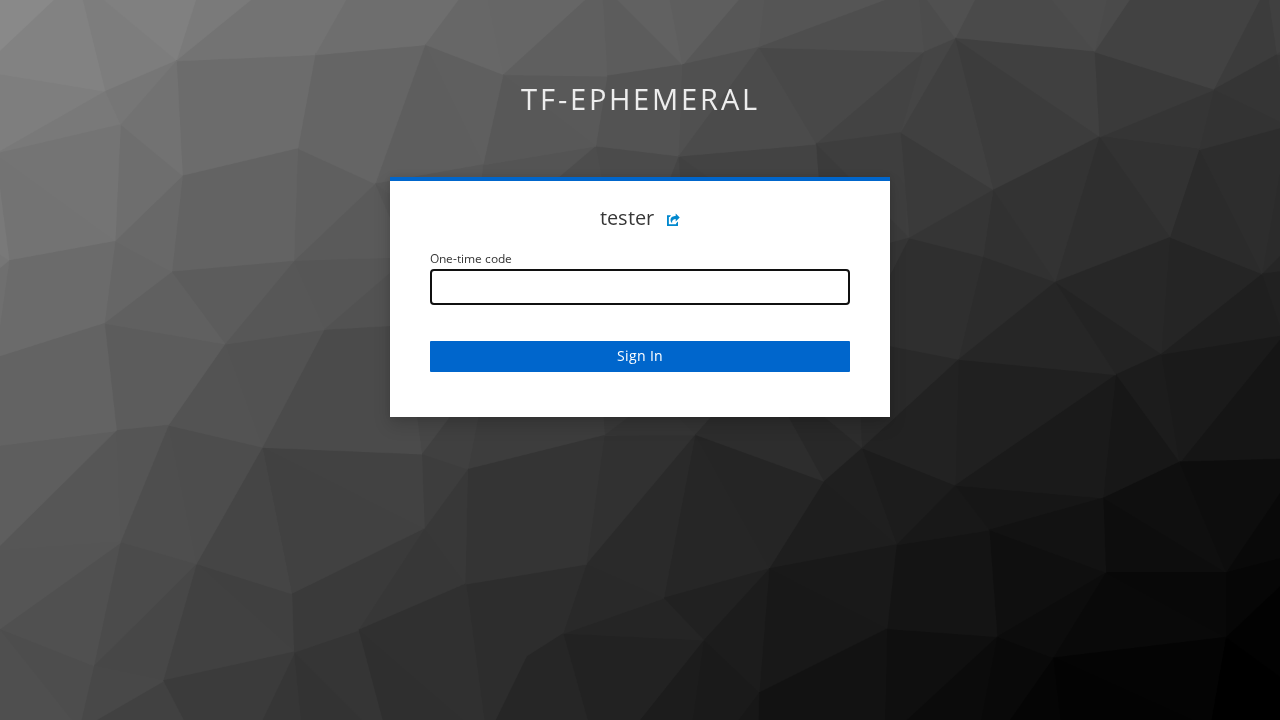
Here is the gate the test has to pass — the app, having accepted the username and password, demanding the one-time code:
And here it is on the other side, signed in, with the account console rendering for the test user:
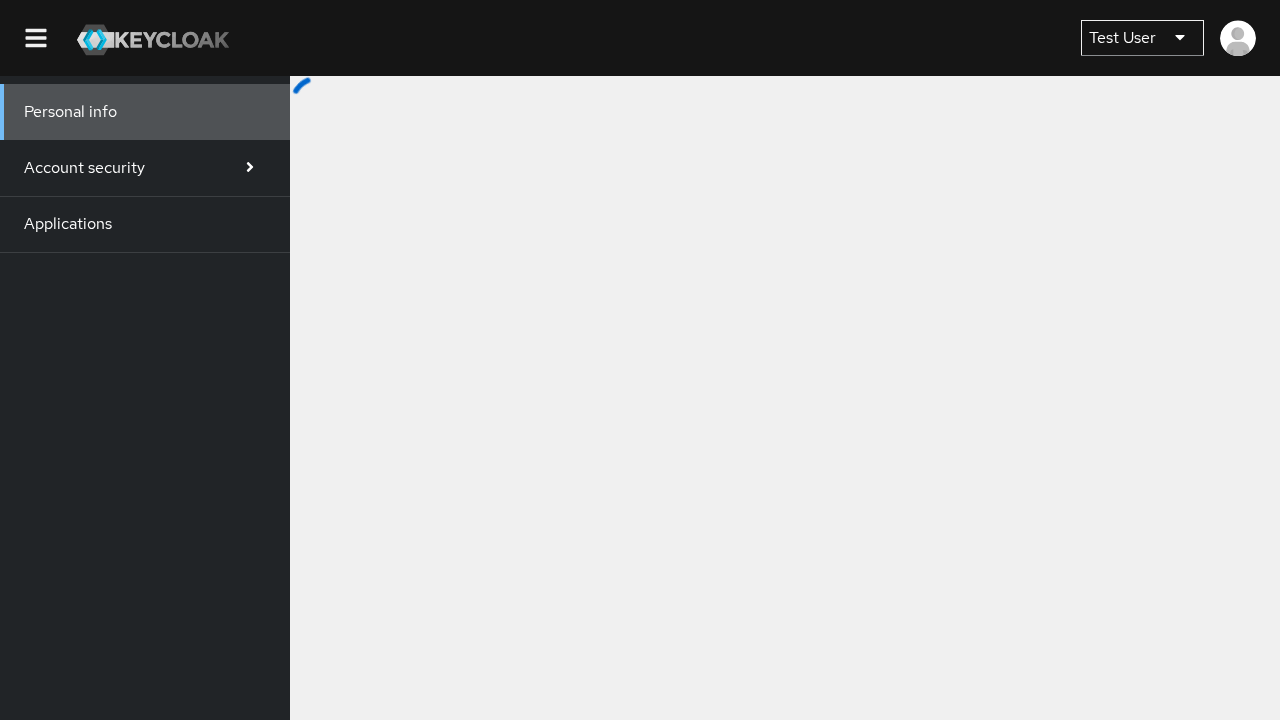
A machine generated a time-based one-time code, submitted it to a real Keycloak, and the IdP’s own verifier accepted it — no human, no standing secret, fully torn down at the end.
The honest part
Building the MFA run surfaced a real bug, which is what runs built on real evidence are supposed to do. The Playwright config that wires the login put the saved-session setting in the global config, where it applied to every project — including the “log in once” setup step whose job is to create that session. So the setup died on the first line trying to read a session that did not exist yet, and the entire authenticated-test path could never run. The fix was small (scope the session to the project that reuses it); the lesson is not — we found it because we insisted on a live login with a screenshot at the end, instead of asserting success in a unit test. It is fixed, with a regression test.
What changed, in one breath
The browser lane is reproducible (Nix in a k8s Job). Its screenshots and recordings are visible in the portal and the cockpit. Each acceptance criterion is graded against a test that actually ran. And authenticated targets — including ones gated by a one-time code — can be tested against a disposable IdP with zero production credentials, with the login captured as proof. “The tests passed” became “here is the page, here is the click, watch the recording.” That is the difference between a checkmark and evidence.